Google Pixel 10 Pro XL vs Samsung Galaxy S25 Ultra: Main differences
Another exciting chapter in the ongoing Google-Samsung contest is about to unfold in 2025.
We may earn a commission if you make a purchase from the links on this page.
Intro
Google has just announced the Pixel 10 series, and of course, the best one among these is the Pixel 10 Pro XL. It's the most advanced and most intriguing new Pixel phone aside from the Pixel 10 Pro Fold.
The Pixel 10 series is once again an evolutionary rather than a revolutionary step for Google, and the Pixel 10 Pro XL appears to be a slightly upgraded version of the Pixel 9 Pro XL. Not too bad, but should that prove enough to pose serious competition to arguably the most intriguing Android phone of 2025, the Galaxy S25 Ultra?
It's been nearly half a year since Samsung unveiled its top-of-the-line Galaxy, and it's been a success story already.
Let's explore how the two Android champs compare.
Pixel 10 Pro XL vs Galaxy S25 Ultra differences:
| Pixel 10 Pro XL | Galaxy S25 Ultra |
|---|---|
| Little to no changes with the previous device's design | Flat and modern titanium design with slightly curved corners |
| Significantly heavier (232gr) | Much lighter (218gr) |
| Large and pronounced camera strip at the back | No camera island, slightly elevated camera cutouts |
| 6.8-inch OLED display, no anti-reflective coating | 6.9-inch OLED screen with anti-reflective coating |
| 3,300 nits of peak brightness | 2,600 nits of peak brightness |
| Google Tensor G5 (3nm TSMC-made) | Snapdragon 8 Elite for Galaxy (3nm) |
| 16GB of RAM | 12GB of memory |
| 256GB, 512GB, 1TB storage variants | 256GB, 512GB, and 1TB versions |
| 50MP+48MP+48MP rear camera system | 200MP+50MP+10MP+50MP rear camera system |
| 42MP selfie camera | 12MP front-facing camera |
| 5,200 mAh battery | 5,000mAh battery |
| 45W wired, 25W Qi2 wireless charging | 45W wired and 15W wireless charging as well |
| No built-in stylus support | Built-in S Pen stylus |
| Pixelsnap magnetic accessory support | No built-in magnetic accessory support |
| Same price as before ($1,199) | $1,300 starting price |
Table of Contents:
Read more:
Design and Size
Ever-evolving yet consistent design language
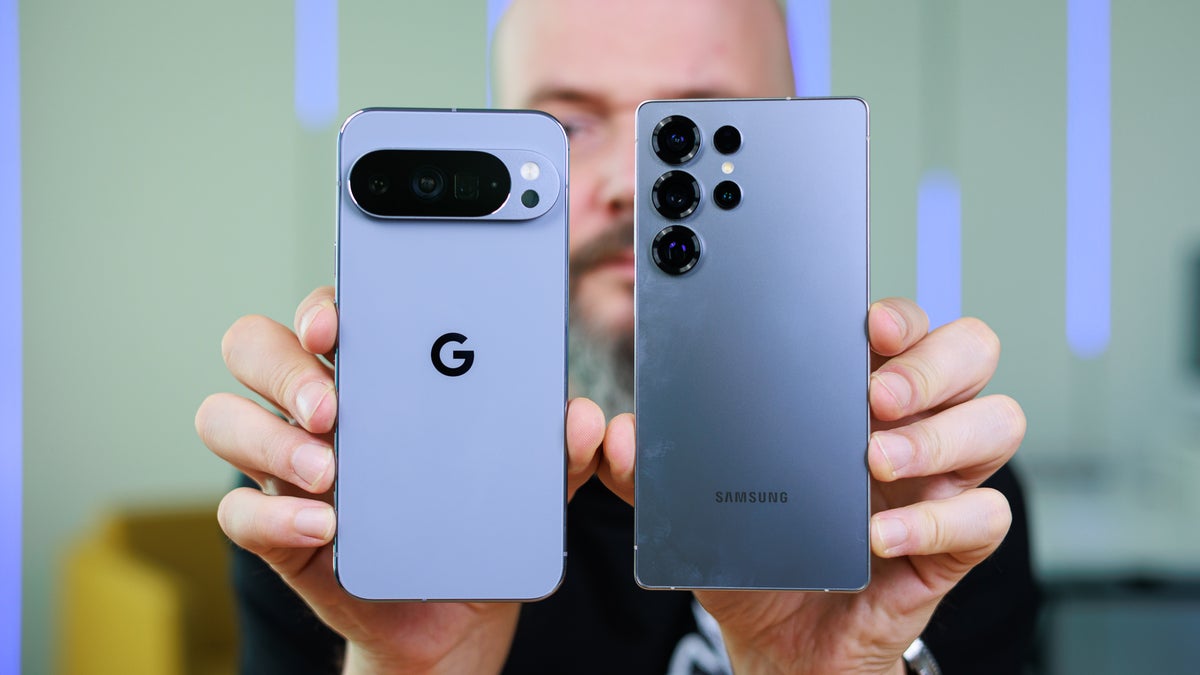
Google has definitely found itself in a comfortable spot for the Pixel design language, as you'd have to play "spot the differences" to notice the changes between the new device and the Pixel 9 Pro XL.
That's not a bad "problem" to have, as we absolutely liked the mature and seasoned, if you will, design language of the Pixel 9 Pro XL, so we are more than glad that it will be sticking around for another year in a row.
The iconic camera strip at the rear is going nowhere, oversized as always, and the flat spacecraft-grade aluminum frame is here to stay, and we have Gorilla Glass Victus 2 all around. An understated design that definitely exudes character.
Meanwhile, the Galaxy S25 Ultra scored some notable changes in comparison with its predecessors. It evolved some slightly curved corners that brought it up to speed with the design language of the standard Galaxy S25 and Galaxy S25 Plus. The titanium frame and Corning Gorilla Glass Armor 2 up front and back remain, and so has the anti-reflective screen coating.
The Galaxy S25 Ultra still features a built-in S Pen stylus, and while rumors claim we might eventually see this iconic accessory decoupled from the phone itself in a potential future generation, the current Samsung flagship employs the essential feature.
Thanks to some bezel slimming, the Galaxy S25 Ultra now employs a larger 6.9-inch screen, up from the 6.8-inch one on the Galaxy S24 Ultra.
Thanks to some bezel slimming, the Galaxy S25 Ultra now employs a larger 6.9-inch screen, up from the 6.8-inch one on the Galaxy S24 Ultra.
| Pixel 10 Pro XL | Galaxy S25 Ultra |
|---|---|
| Dimensions 162.8 x 76.6 | Dimensions 162.8 x 77.6 |
| Thickness 8.5mm | Thickness 8.2mm |
| Weight 232 gr | Weight 218 gr |
Size-wise, the Pixel 10 Pro XL is largely identical to the Pixel 9 Pro XL and measures 162.8 x 76.6 x 8.5 mm. Interestingly, the flagship is heavier and tips the scales at 232 gr. At the same time, the Galaxy S25 Ultra measures 162.8 x 77.6 x 8.2 mm but is much lighter at 218 gr, so it definitely seems like Samsung has the upper hand in terms of overall design efficiency.
Both phones share the IP68 water and dust resistance, now standard among flagships and many mid-rangers alike.
While both the Pixel and the Samsung employ a standard and pretty similar button layout, those are inverted: the Galaxy S25 Ultra has the power button below the volume rocker, while the Pixel 10 Pro XL has the volume rocker below the power button. It's a matter of getting used to, but definitely worth pointing out.
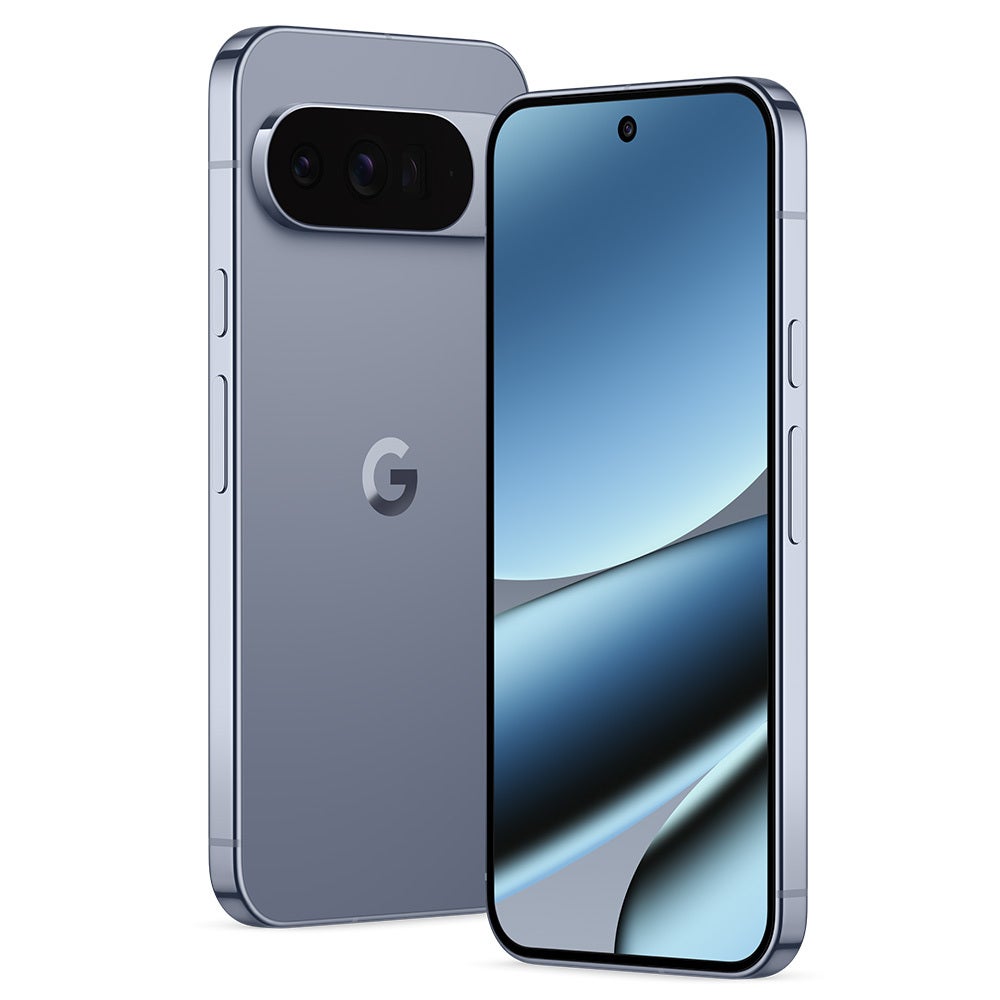
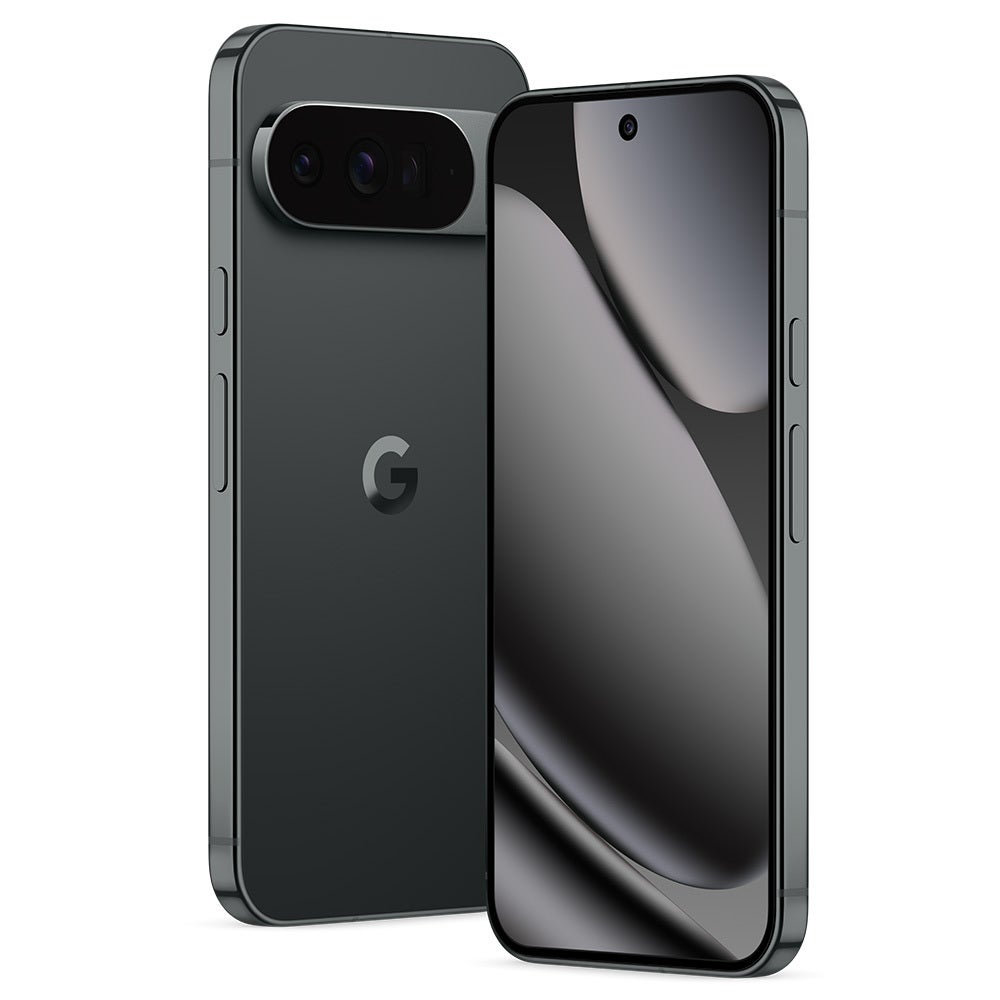
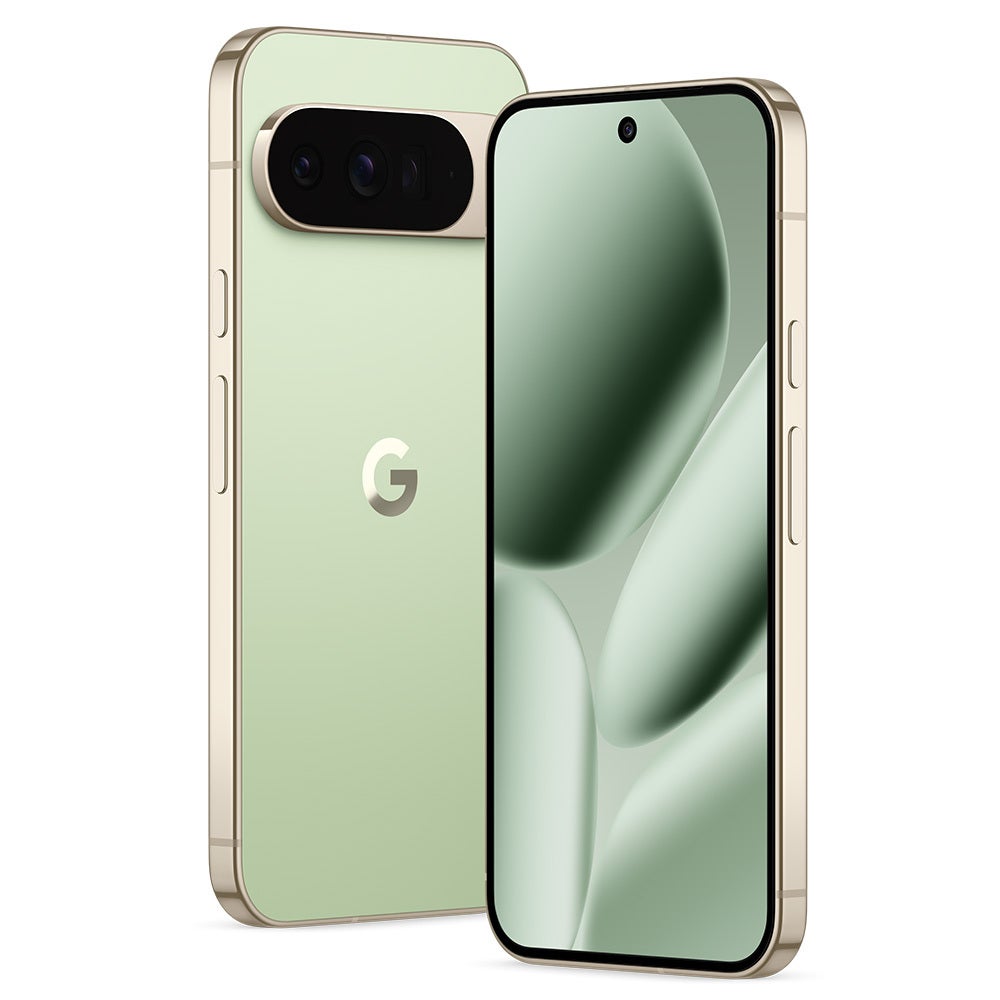
In terms of colors, the Pixel 10 Pro XL will launch in Moonstone, Obsidian, Porcelain, and Jade colors. The Galaxy S25 Ultra is available in Titanium Whitesilver, Titanium Silverblue, Titanium Gray, and Titanium Black. Jadegreen, Pinkgold and Jetblack are exclusively available on Samsung.com.

Display Differences
The Pixel 10 Pro XL arrives with a 6.8-inch OLED Super Actua screen with LTPO (1-120 Hz refresh rate) support, but the true highlight here is the super-high peak brightness of 3,300 nits. That beats the older generation by some 300 nits and definitely establishes the Pixels as some of the brightest phones around.
Sure, we lack a dedicated anti-reflective coating here as on the Galaxy S25 Ultra, but the extra brightness might very well make up for that.
On the other hand, the Galaxy S25 Ultra arrives with a large 6.9-inch display that's capable of achieving around 2,600 nits of peak brightness. However, the Galaxy S25 Ultra arrives with an anti-reflective display coating, which greatly boosts the legibility of the screen and somewhat helps it hold its own in terms of legibility against brighter adversaries.
Other than that, the display itself is a Dynamic OLED 2X one, with a super-smooth 1-120Hz refresh rate, and the signature exceptional color and gamma properties of a flagship Samsung screen.
| Pixel 10 Pro XL | Galaxy S25 Ultra |
|---|---|
| Size 6.8-inch | Size 6.9-inch |
| Peak brightness 3,300 nits | Peak brightness 2,600 nits |
Performance and Software
Tensor finally playing in the 3nm league, but would that be enough?
After years of its Tensor chips being built around Samsung's Exynos architecture, Google can finally make its Tensor chip from scratch. That's right, the Tensor G5 uses a custom AP (application processor) and is built by TSMC on its 3nm manufacturing process.
That's an exciting development, which could potentially finally elevate the Tensor chip to the performance levels of the latest Snapdragons and Apple's own mobile chips.
The Pixel 10 Pro XL comes with 16GB of memory and three storage versions ranging from 256GB to 1TB. Yes, the entry-level 128GB flavor is gone.
| Pixel 10 Pro XL | Galaxy S25 Ultra |
|---|---|
| Chipset Tensor G5 3nm | Chipset Snapdragon 8 Elite for Galaxy 3nm |
| Memory 16GB | Memory 12GB |
| Storage 256GB 512GB 1TB | Storage 256GB 512GB 1TB |
At the same time, the Galaxy S25 Ultra comes along with the Snapdragon 8 Elite for Galaxy, a custom and slightly overclocked version of Qualcomm's flagship chipset. It's a proper powerhouse that routinely dwells at the top of the performance charts at the moment. The Galaxy S25 Ultra comes with 12GB of RAM, as well as 256GB, 512GB, and 1TB versions as well.
The Galaxy S25 Ultra is on the cusp of getting Android 16 and One UI 8, which are reportedly very close to official release. Currently, the phone runs on Android 15 and One UI 7.
The Pixel 10 Pro XL, on the other hand, comes with Android 16, and its market release should coincide with the official rollout of the Material 3 Expressive redesign that is hailed as the most intriguing new feature of Android 16.
One promising new feature arriving with the Pixel 10 Pro XL and utilizing the latest in Google AI technology is called Magic Cue. This is a proactive system that will bootstrap your data and unique usage patterns to suggest relevant pieces of information when possible. For example, if someone messages you about a lunch reservation, Magic Cue will scour your Gmail for reservation confirmation emails and automatically recommend a relevant answer right there in the thread, acting as your virtual butler agent of sorts.
Both devices will be supported for seven years, including software updates, security patches, and feature drops.
Camera
Long-zoomers, unite!
The Pixel 10 Pro XL comes with a 50MP main camera, 48MP ultrawide, and 48MP telephoto with 5X optical zoom camera setup at the rear, quite similar to what we got on the Pixel 9 Pro XL. The signature feature here is the new Pro Res Zoom, which can zoom up to 100X! Such a long zoom is pretty much on par with all other Android top phones right now, which usually offer around 100X zoom.
It's not just a digitally assisted in-sensor crop, though: Google says the new zooming utilizes bespoke Tensor G5 algorithms and AI know-how to intelligently clean up far shots of people and buildings.
Another cool new feature is the built-in Camera Coach functionality, which will use AI to intelligently nudge you to change your composition, move around, or incorporate different settings to achieve the best possible photo with your phone. Has the potential to be a decent addition, that one.
How does the Galaxy S25 Ultra compare?
Samsung's flagship comes with a quad-camera setup at the back, helmed by a high-res 200MP wide-angle camera, a 50MP telephoto camera with 5X optical zoom, a 50MP ultrawide, and a 10MP telephoto with 3X optical zoom. Maximum zoom here is 100X yet again, allowing for a pound-for-pound comparison between the Galaxy and the Pixel.
| Pixel 10 Pro XL | Galaxy S25 Ultra |
|---|---|
| Wide 50MP F1.68 | Wide 200MP F1.7 |
| Ultrawide 48MP F1.7 | Ultrawide 50MP F1.9 |
| Periscope 48MP 5X zoom, F2.8, 100X Pro Res Zoom | Periscope 50MP 5X zoom |
| - | Telephoto 10MP 3X zoom |
| Front 42MP F2.2 | Front 12MP |
Battery Life and Charging
Could the Pixel easily have the upper hand?
The Pixel 9a's tenure as the Google phone with the largest battery was fairly short-lived, as the Pixel 10 Pro XL arrives with an enormous 5,200 mAh battery in the trunk. That's by far the biggest battery on a Pixel phone... for now, at least!
Such a large battery could play very well with the more efficient Tensor G5 and OLED screen up front, hinting at a strong battery endurance that could easily overshadow the Galaxy S25 Ultra.
That one continues to rely on a 5,000mAh battery for yet another year in a row, when most of Samsung's rivals are already flirting with batteries pushing 6,000mAh or more.
Surprisingly, the Pixel 10 Pro XL has scored some pretty exciting changes to both the wired and wireless charging. We get 45W wired and 25W wireless charging, with full support for the latest Qi2.2 standard.
The Pixel 10 series also introduces Pixelsnap, Google's version of MagSafe, which integrates the necessary magnets straight inside the device itself. Pixelsnap is compatible with all MagSafe accessories so that you can easily start using your MagSafe collection immediately. Moreover, all of Google's new cases for the Pixel range also support Pixelsnap, and Google has a trio of charging accessories and stands as well.
Charging-wise, we expect no changes: at least 37W wired charging for the Pixel 10 Pro XL. The Galaxy S25 Ultra comes with 45W wired fast-charging, so charging tiems should be mostly comparable.
| Pixel 10 Pro XL | Galaxy S25 Ultra |
|---|---|
| Battery 5,200 mAh | Battery 5,000 mAh |
| Wired charging 45W | Wired charging 45W |
| Wireless charging 25W | Wireless charging 15W |
Specs Comparison
Here's how the official Pixel 10 Pro XL vs Galaxy S25 Ultra specs compare.
| Pixel 10 Pro XL | Galaxy S25 Ultra |
|---|---|
| Size, weight 162.8 x 76.6 x 8.5 mm 232gr | Size, weight 162.8 x 77.6 x 8.2 mm 218gr |
| Screen 6.8" OLED 1-120Hz 3,300 nits | Screen 6.9" OLED 120Hz Anti-reflective coating 2,600 nits |
| Processor Google Tensor G5 3nm | Processor Snapdragon 8 Elite for Galaxy 3nm |
| Versions: 16GB/256GB 16GB/512GB 16GB/1TB LPDDR5 | Versions: 12GB/256GB 12GB/512GB 12GB/1TB LPDDR5 |
| Cameras: 50MP main 48MP ultra 48MP 5X zoom, 100X Pro Res Zoom 42MP front | Cameras: 200MP main 50MP ultra 50MP 5X zoom 10MP 3X zoom 12MP front |
| Battery: 5,200 mAh | Battery: 5,000 mAh |
| Charging: USB-C 45W wired 25W Qi2 wireless Pixelsnap | Charging: USB-C 45W wired 15W wireless |
Also read:
- Google Pixel 10 Pro XL vs iPhone 16 Pro Max: expectations
- Google Pixel 10 Pro XL vs OnePlus 13: Main differences to expect
Summary
Appearances definitely do lie. Sure, the Pixel 10 Pro XL is mostly identical to the Pixel 9 Pro Fold, but on the inside, there's a host of improvements that will definitely make it a much better device.
We're talking about significantly better performance, efficiency, and battery life thanks to the Tensor G5 and the 5,200 mAh battery on deck. The screen has scored a small but notable peak brightness improvement, and finally, the camera is easily the most versatile it has always been.
At the same time, the Galaxy S25 Ultra is easily one of the best Android phones available in the US right now. It has established itself as the device to beat, which is typical of Samsung flagships. It's the best-spec'd one, with the most exciting design language and the extra utility of the S Pen stylus.
Price-wise, the Pixel 10 Pro XL will have the upper hand in being more affordable: it will have an unchanged $1,199 price tag, $100 less than the Galaxy S25 Ultra, which goes for $1,300.
One thing is for certain, the battle between these two Android devices will be legendary!

Follow us on Google News







 FCC OKs Cingular\'s purchase of AT&T Wireless
Things that are NOT allowed:
To help keep our community safe and free from spam, we apply temporary limits to newly created accounts: